
Last updated November 23, 2026
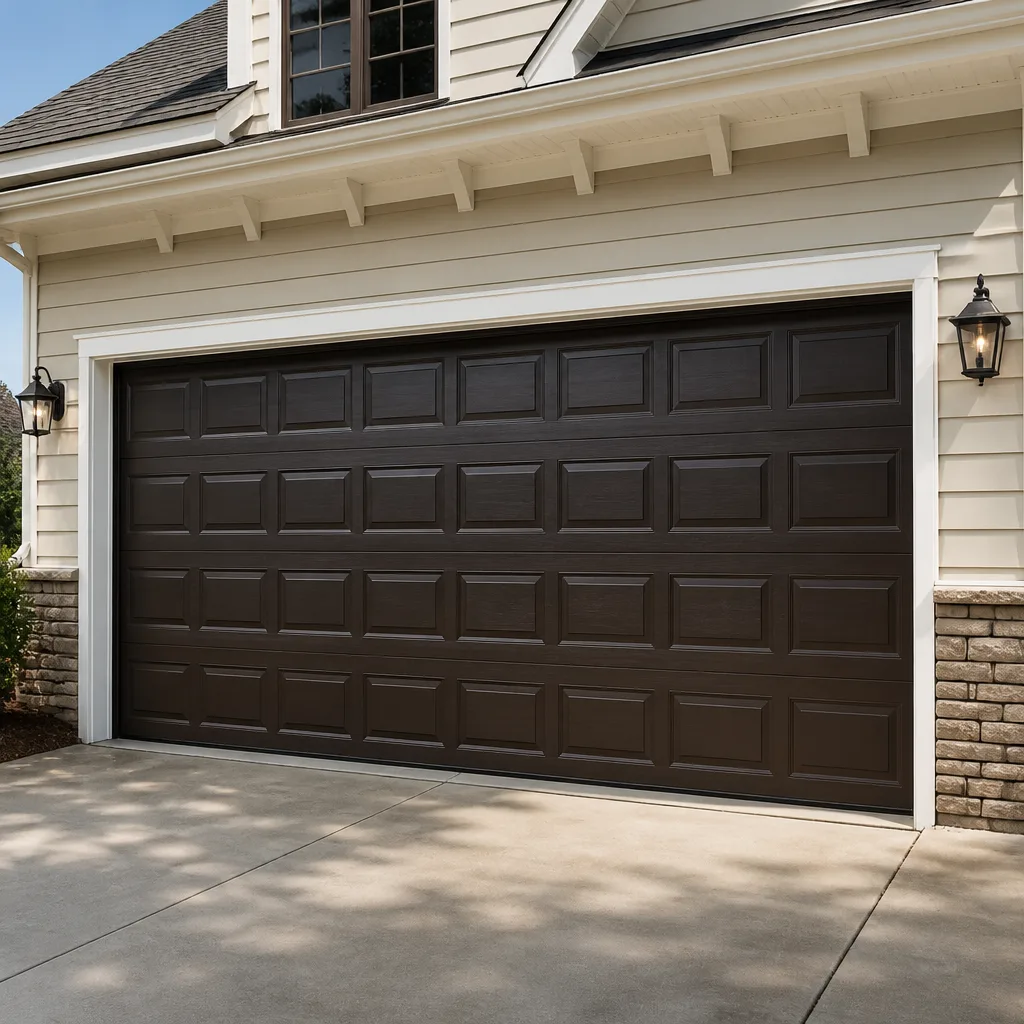 Raised-panel steel
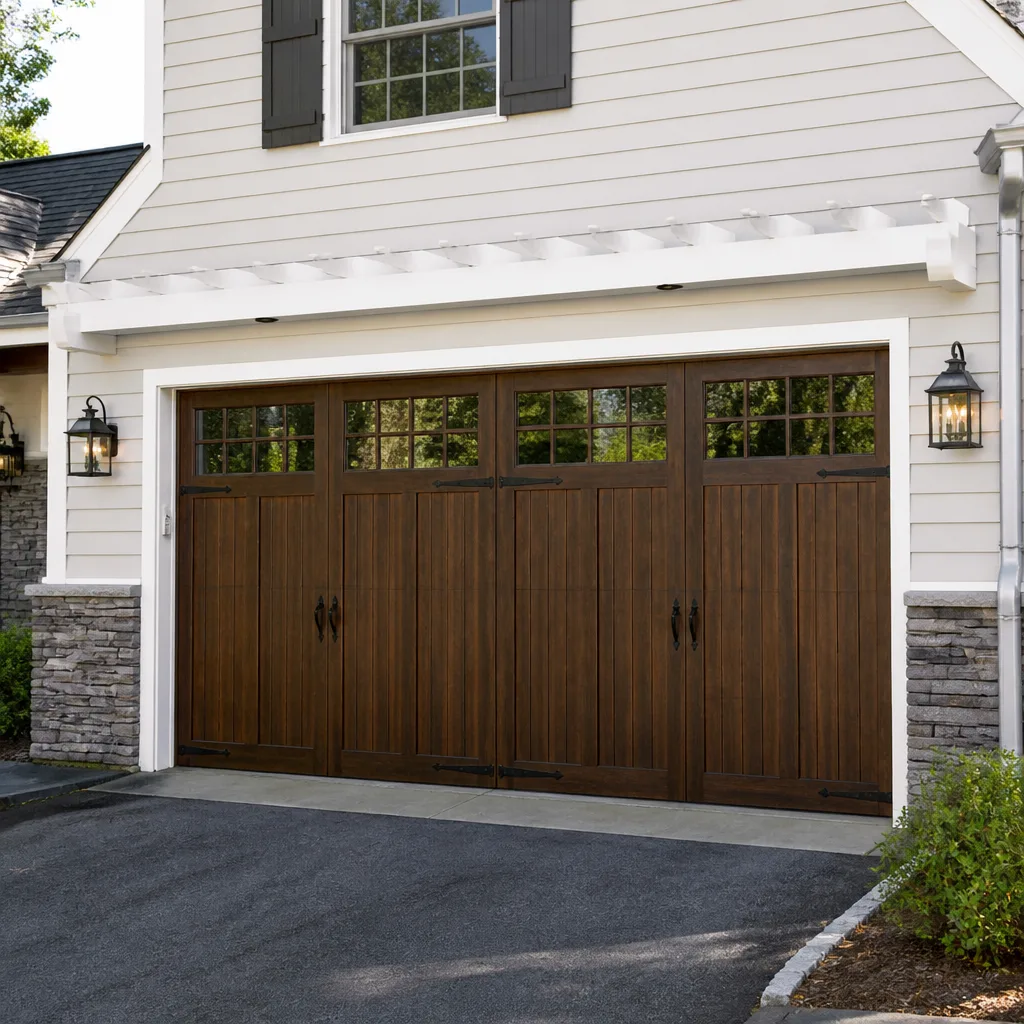 Carriage house
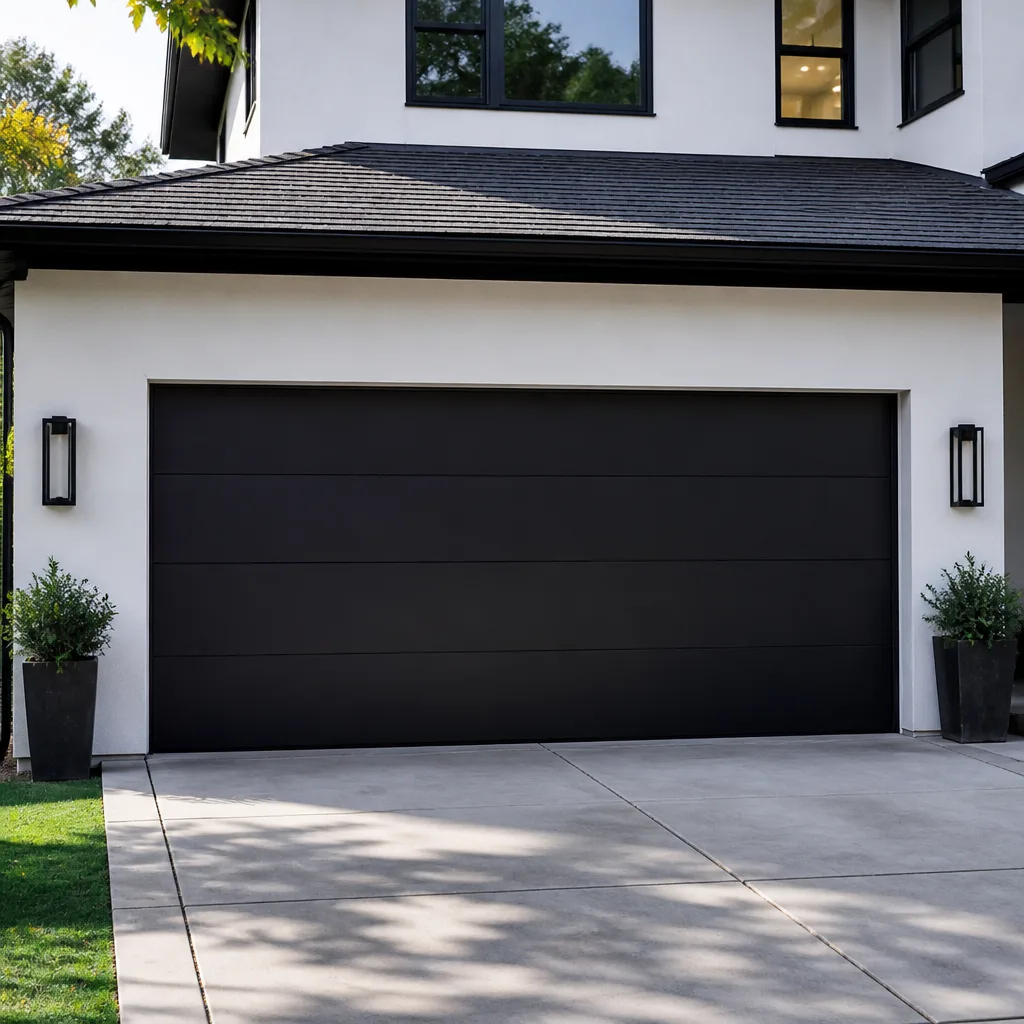 Modern flush
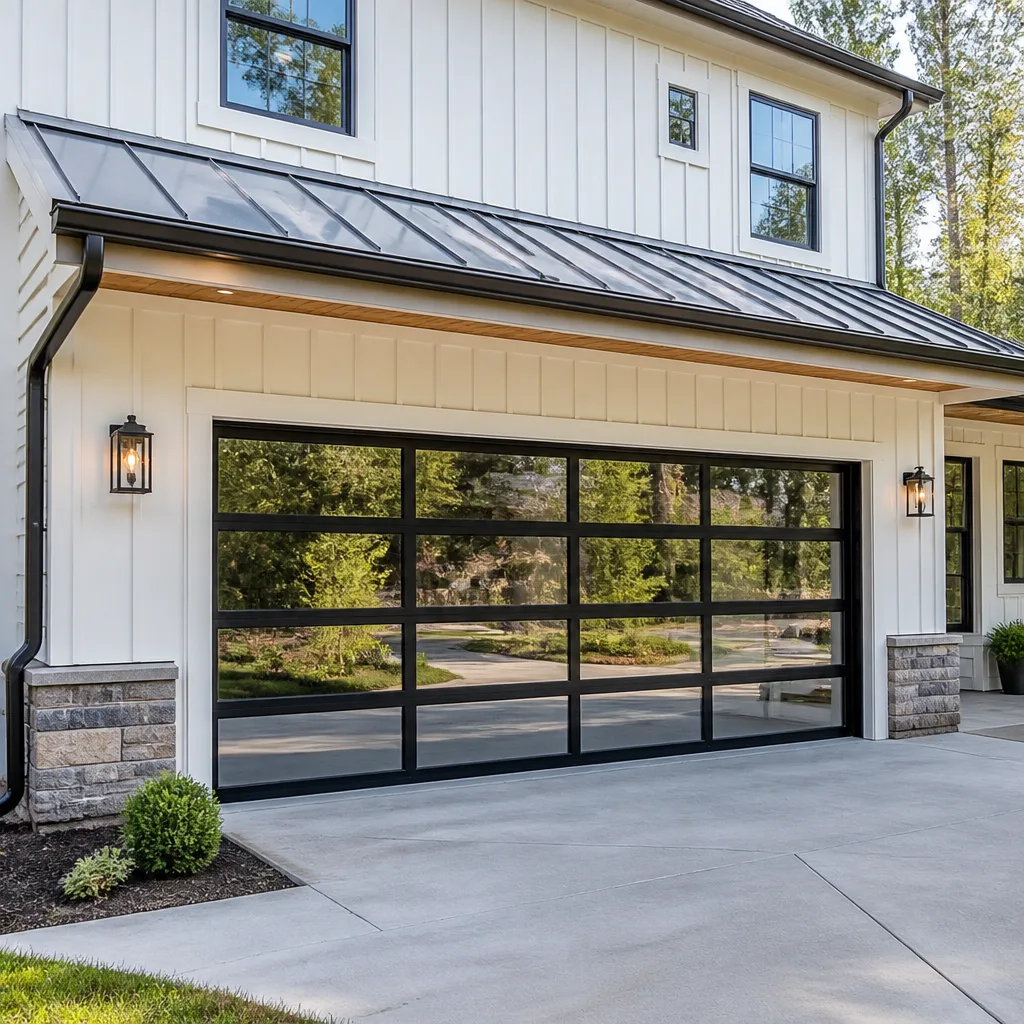 Full-view glass
 LiftMaster openers
 Chamberlain openers
Full 25-point door and opener safety check with every visit - springs, cables, rollers, tracks, and your LiftMaster or Chamberlain opener included
You get a price before we start. It does not change when the pro arrives.
Get your free estimateGarage Door Warning Signs: A Jupiter Homeowner’s Reference Guide
A garage door that hesitates for half a second before it opens isn’t “getting old.” In Jupiter’s heat, that hesitation is often an opener thermal cutoff struggling against a mechanical drag problem, and left alone it can leave your car stranded inside the garage within a couple of months. Most warning-sign articles list the obvious failures: a snapped spring, a door hanging crooked, an opener that’s completely dead. Those are the emergencies. This guide is about the quiet indicators Jupiter homeowners tend to dismiss, and why they escalate faster here than they would almost anywhere else. You’ll learn what each symptom is actually telling you, which ones you can watch, and which ones need a technician before something bigger lets go.
Quick Answer
The most important garage door warning signs in Jupiter are a door that hesitates or reverses before opening, a bang or grinding sound from the springs or tracks, a door that won’t stay level when you lift it halfway, and an opener whose remote range has shrunk or whose motor runs longer than it used to. In this climate, heat-driven thermal expansion of steel tracks and UV damage to rubber seals push these minor symptoms toward full failure faster than in cooler parts of the country. If a door hesitates, reverses, or makes a sharp bang, stop using it and have a technician look at it before you cycle it again.
Styles & brands we work with
- Raised-panel steel
- Carriage house
- Modern flush
- Full-view glass
- LiftMaster openers
- Chamberlain openers
Table of Contents
- What a door that hesitates or reverses really means
- Reading the sounds: springs, tracks, and what each noise tells you
- The 20-second balance test every Jupiter homeowner should know
- Decoding opener behavior changes before they fail
- Rust patterns: surface oxidation vs. structural corrosion
- Bottom seal deterioration and the pest problem it opens up
- Common mistakes to avoid
- When to call a professional
What a Door That Hesitates or Reverses Really Means
A door that pauses for a beat before it lifts, or that rises a few inches and then reverses back down, is usually telling you the opener is fighting something. The motor is working harder to move a door that has developed drag somewhere in the system: a binding track, a roller that’s seized, a hinge that’s stiffened, or a torsion assembly that’s lost some of its lift. Modern openers from brands like LiftMaster and Chamberlain are built with thermal protection that cuts the motor out when it overheats. When the door drags, the motor runs hotter, and the thermal cutoff trips sooner. That half-second hesitation is the opener protecting itself, not the door “warming up.”
In Jupiter this happens faster than most homeowners expect. A garage that faces west soaks up afternoon heat for hours, and the steel track expands as it warms. That expansion can pull a track slightly out of alignment, adding resistance the opener has to overcome. Over a season, a small drag turns into a motor that cuts out more and more often. Using the door “just a few more times” during that window is how a mechanical fix turns into a stranded car.
Reversing is a separate signal worth understanding. If the door reverses immediately after starting down, the safety sensors near the floor may be misaligned or dirty, especially if the door gets direct sun. If it reverses partway down on its own, the opener’s travel limits or force settings may be out of adjustment and need a technician to set them correctly. Don’t raise the force setting on the opener to push through the problem; that masks the drag and wears the motor faster.
What to do: stop cycling the door repeatedly once you notice the hesitation, and book garage door opener repair so a technician can measure the actual drag and check the opener’s settings against the door’s weight.
Reading the Sounds: Springs, Tracks, and What Each Noise Tells You
A garage door is a handful of moving parts under tension, and each one fails with a different sound. Learning to tell them apart is the single most useful skill a Jupiter homeowner can develop, because the sound usually arrives before the failure.
The sharp bang
A single loud bang, followed by the door becoming very heavy or refusing to lift, almost always means a torsion spring has broken. This is the moment to stop. A door with a broken spring should not be forced open, and the spring itself should never be touched. Torsion and extension springs store enormous energy, and the hardware that contains them can fail without warning. Spring repair is not a DIY repair, and this is exactly the job our trained technicians handle, not something to attempt with household tools.
The grind and the squeal
A grinding or scraping sound as the door moves usually points to a roller that’s seized or a hinge that’s worn, dragging metal against metal in the track. A high-pitched squeal is more often dry metal-on-metal contact somewhere in the moving parts. Lubrication quiets a squeal, but it does not fix a seized roller or a misaligned track, so quieting the noise and then leaving it is a mistake. The squeal is the system telling you it’s running dry; the underlying wear still has to be corrected.
The rattle that wasn’t there before
A rattle or a looser, clunkier sound than the door used to make often means a loose fastener, a worn hinge, or a track that’s worked slightly out of position. It’s the earliest and easiest sound to catch. Catching it early is how a small adjustment stays small.
How springs actually fail in Jupiter heat is covered in more detail in the balance section below, and if you hear the bang, the right move is a call, not a repair attempt.
The 20-Second Balance Test Every Jupiter Homeowner Should Know
Door balance is the heart of garage door health, and it’s the thing Jupiter heat stresses hardest. The springs on your door are sized to carry its weight. When the door is balanced, a person can raise it by hand with modest effort and it will hold its position. When it’s out of balance, the springs are no longer doing their share, and the opener is quietly making up the difference on every cycle.
Thermal expansion is why balance issues surface faster here. Steel tracks and the door’s steel panels expand as the garage heats up through the day, and a door that’s perfectly aligned in the cool of the morning can bind slightly by mid-afternoon. Over months, that daily bind wears rollers and hinges unevenly and puts more load on the springs. A door that feels fine in January can feel heavy and stiff by August.
The 20-second balance test
- Start with the door fully closed and the opener disconnected, using the manual release cord.
- Lift the door by hand to about waist height, then to halfway, keeping your hands on a firm part of the door and your feet clear.
- Let go gently. A balanced door stays where you left it. A door that sinks back down, or that feels heavier than it should, has a spring or balance problem.
- A door that lifts easily but races upward on its own is also out of balance; that’s spring tension working against you.
- Don’t force a heavy door. If it won’t hold, lower it slowly and stop using the opener until a technician checks it.
A door that fails the balance test is dragging the opener on every cycle, shortening the opener’s life while the springs do less of the work they were installed for. If your test shows a heavy or drifting door, our team can measure the spring tension and set the balance correctly. For more on what a proper spring job involves, see our guide to garage door spring repair.
Decoding Opener Behavior Changes Before They Fail
The opener is the electronic brain of the system, and its behavior changes are a roadmap to which component is failing. Most homeowners notice the symptom but misread the cause, which is why a small opener issue often gets replaced with a new unit before anyone diagnoses it. A technician who knows LiftMaster, Chamberlain, Genie, and Craftsman systems can usually tell you what’s failing from the symptom alone.
- The remote’s range shrinks. If you used to open the door from down the street and now you have to be nearly in the driveway, the opener’s receiver or the remote’s battery is the first suspect. Weak remotes are common and inexpensive to sort out; a fading receiver is a genuine opener fault.
- The motor runs longer than it should. A cycle that’s gotten noticeably slower often means the opener is compensating for door drag, which takes us back to balance and track issues. The opener is the messenger, not always the problem.
- The door reverses unpredictably. Sun glare on the safety sensors, a misaligned sensor bracket, or out-of-adjustment force and travel limits can all cause this. Don’t just reset the opener and hope; find the cause.
- The wall button stops responding but the remote works, or vice versa. That split points to a wiring or logic-board fault rather than a mechanical issue, and it’s exactly the kind of electronic diagnosis a general repair shop often can’t make.
- The light flashes in a pattern and the door won’t move. Many openers blink a diagnostic code when something is wrong. Note the pattern; it tells the technician what to check first.
Smart-home-compatible openers from LiftMaster and Chamberlain add app connection faults and Wi-Fi pairing problems to the list, and those are electronic issues, not door problems. If your opener is showing any of these signs, book a closer look before the failure becomes a dead door with a car inside.
Rust Patterns: Surface Oxidation vs. Structural Corrosion
Rust on garage door hardware is normal to some degree in South Florida’s humidity, and not all of it is a problem. The trick is telling the rust that’s cosmetic from the rust that’s eating into something structural. Here’s how to read it.
Surface oxidation: what’s usually cosmetic
A light, powdery reddish or orange film on hinge plates, track faces, or the bottom bracket is surface oxidation, and it’s common on plated hardware in humid air. It’s a sign that the protective coating has worn through, not that the part is failing. Cleaning and re-lubricating those points keeps them moving and slows the oxidation. This kind of rust is a maintenance reminder, not a replacement cue.
Structural corrosion: what needs attention
Rust that’s pitting, flaking, or deep enough to change the shape of a part is a different story. Look for:
- Hinges where the rust has eaten into the knuckle and the pin is loose or grinding.
- Track sections where corrosion has caused the rail to bow or the roller channel to narrow.
- The bottom of a steel panel rusted through along the bottom edge, where water collects.
- Rollers that have rusted inside their housings and no longer turn freely.
- Bolts or brackets where rust has visibly shaved down the thread or the metal thickness.
Structural corrosion matters because a rusty roller, hinge, or bracket stops moving smoothly, which adds resistance to the door and load on the opener and springs. For steel doors from Clopay or Amarr, the finish is built to resist this, but a rusted-through bottom edge or a corroded track still means replacement of that section. If you’re not sure which side of the line a rust spot falls on, a technician can tell you in minutes. Regular upkeep is a good reason to line up garage door repair before small corrections become replacements.
Bottom Seal Deterioration and the Pest Problem It Opens Up
The rubber seal along the bottom of your door is the first thing Jupiter’s sun attacks, and when it goes, it takes your garage’s pest barrier with it. This is one of the most overlooked warning signs in the whole system, because nothing about it looks like a mechanical failure. It looks like a notched, brittle strip of rubber.
UV exposure breaks down the rubber in the bottom seal over time. It dries, cracks, hardens, and eventually chips away, leaving gaps where the door meets the floor. Some doors use a vinyl astragal-bulb seal; others use a blade-style or brush seal, and each ages differently. The early signs are a seal that’s stiff and has lost its springiness, a seal that leaves visible daylight gaps when the door is down, or a seal that’s started to tear at the ends.
What that gap means in practice: insects, rodents, and small creatures find a direct path into the garage. In a warm place like Jupiter that matters more than it does in a colder climate, because pests stay active through the year and a garage that’s cooler than the outside air becomes attractive. Moisture, too, can come in through a failed seal, feeding the rust problem covered above.
What to check:
- Close the door and look along the whole seal line for daylight coming through.
- Press the seal with your thumb; it should feel soft and spring back, not stiff and brittle.
- Look for cracks, missing chunks, or a seal separating from its retainer.
- Check the seal at both ends, where it’s most exposed to rain and sun.
A failing seal is cheap to replace and easy to overlook, which is exactly why it’s a hallmark of Jupiter garage-door care. Want a second opinion on yours? Our team can check the seal line and flag anything else worth fixing at the same time. Book a repair visit and we’ll go over the whole system.
See the difference
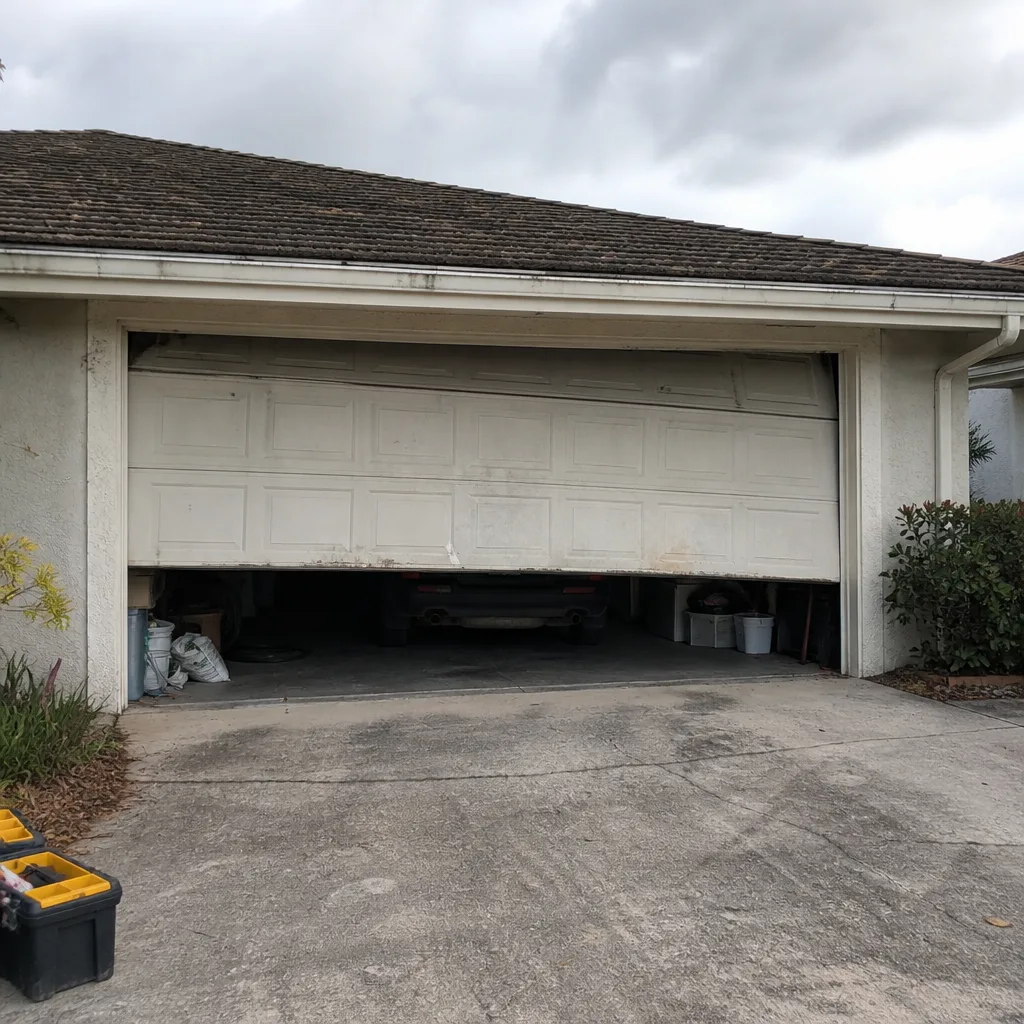 Before
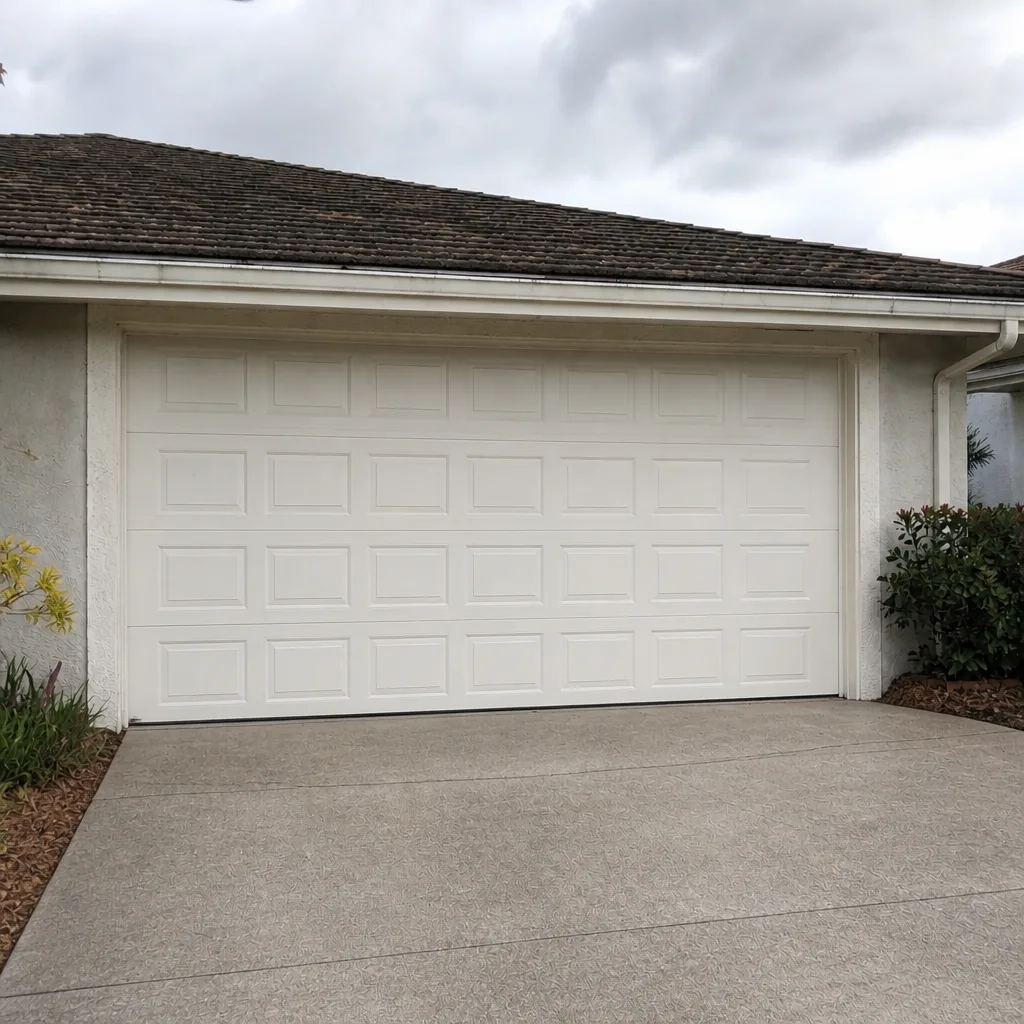 After
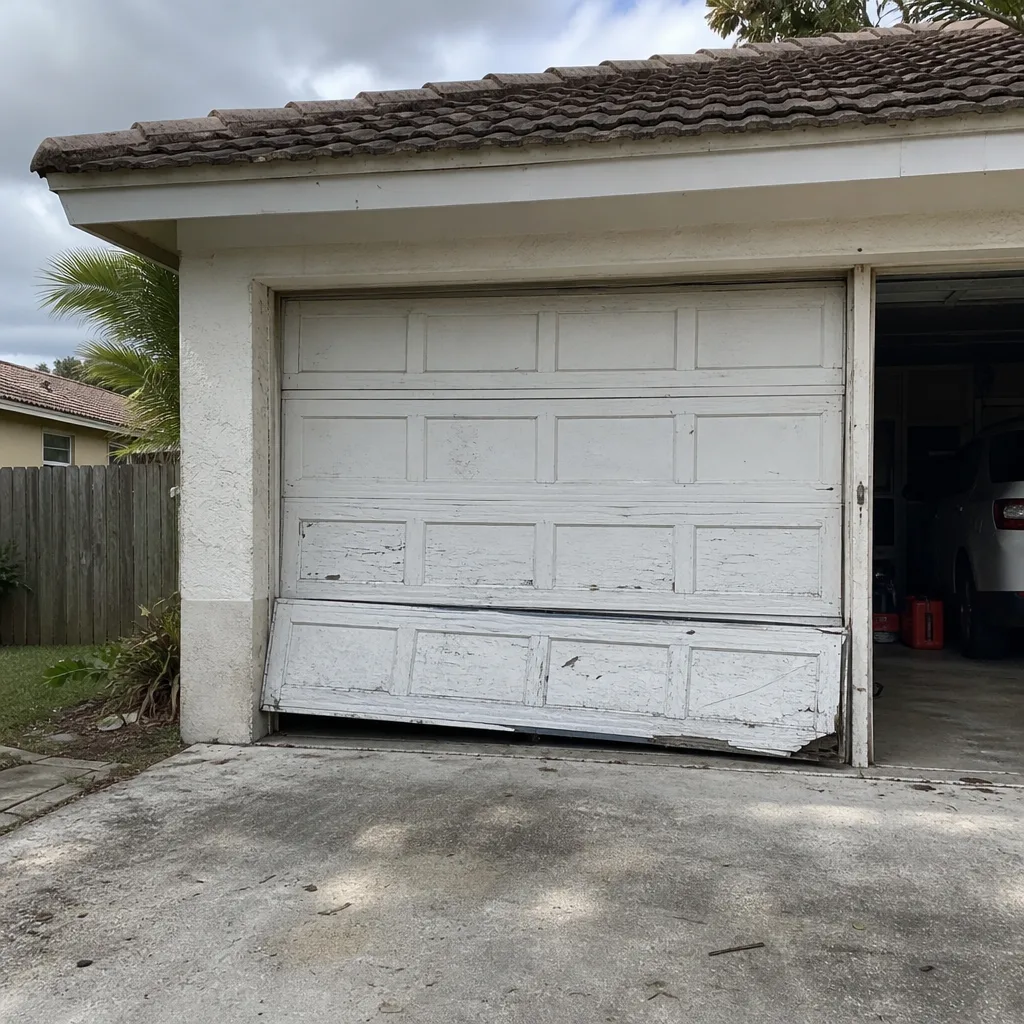 Before
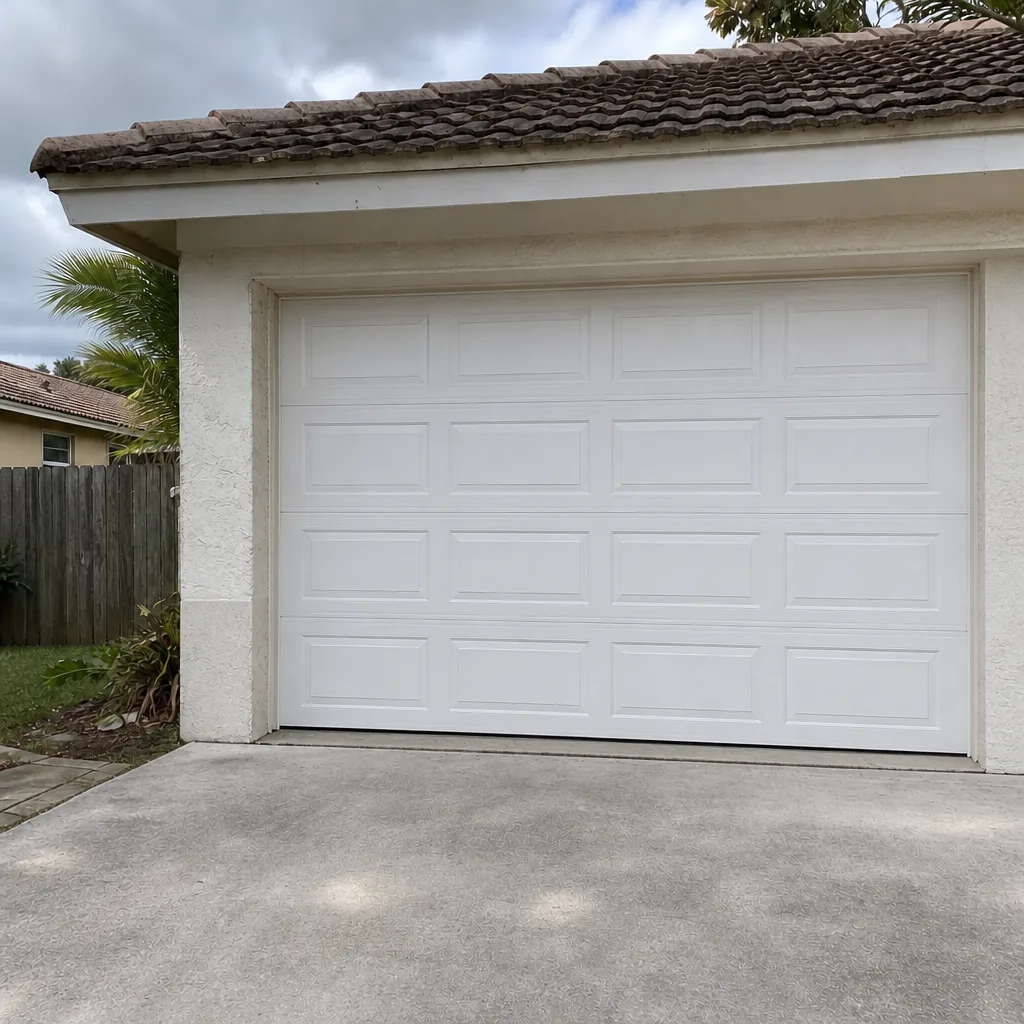 After
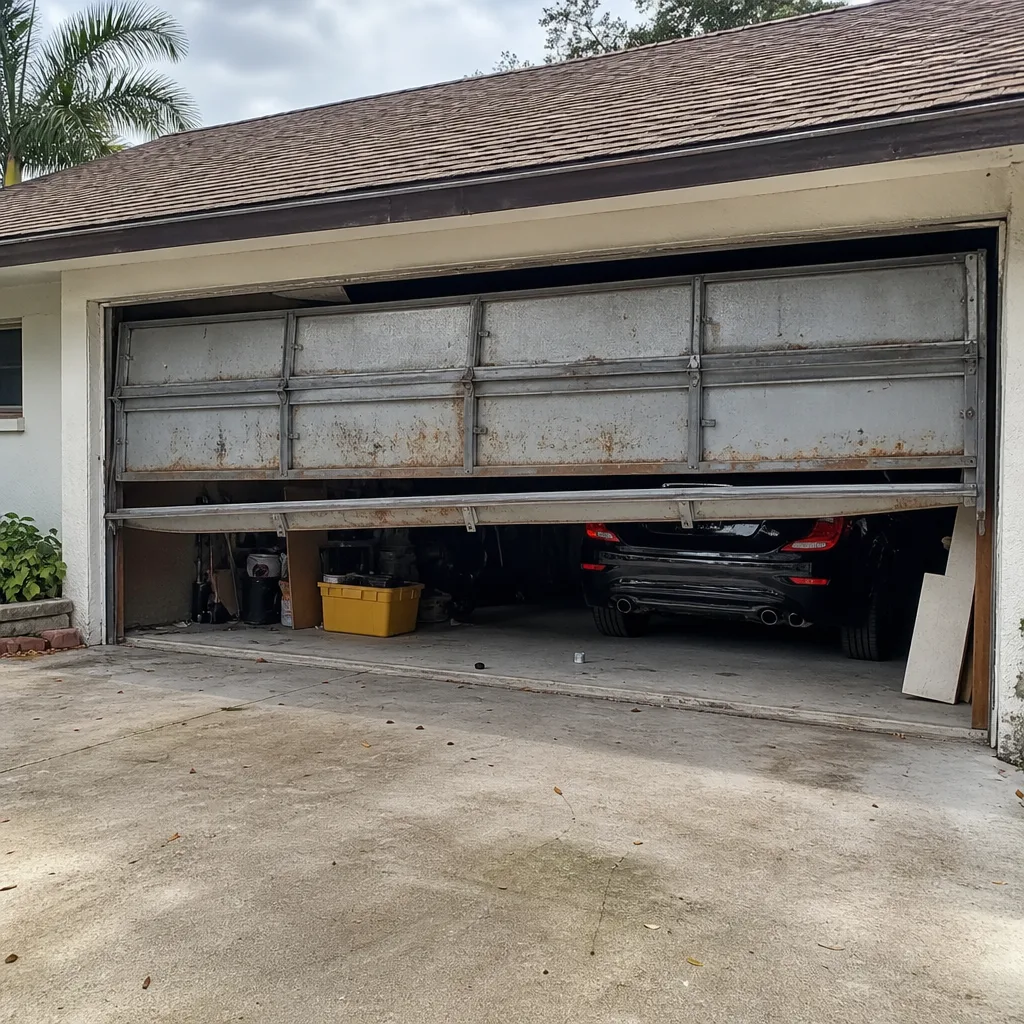 Before
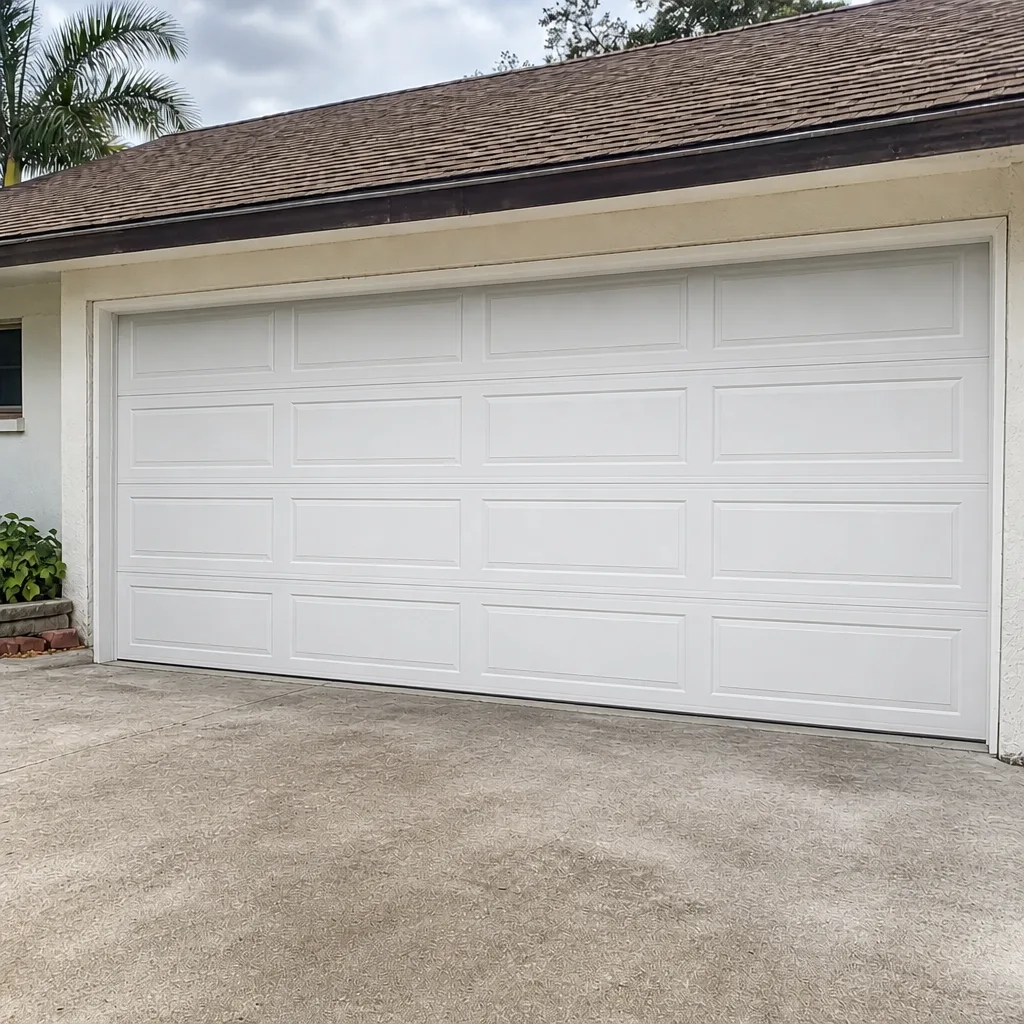 After
How the Warning Signs Stack Up
One symptom is usually a single job. Two or three at once, especially in the heat of summer, means the door and opener are both under stress and worth a full check. Here’s a quick reference.
- A hesitation before lifting: likely track drag or a failing roller driving the opener into thermal cutoff. Check the balance, then book a repair.
- A sharp bang and a heavy door: broken torsion spring. Stop using the door and call.
- A grinding or squealing cycle: seized roller, worn hinge, or a track out of line. Adjust and lubricate.
- A door that sinks on the 20-second test: springs losing tension, or weight the springs can’t carry. Measure and reset.
- Weak remote range plus a longer cycle: opener under stress from door drag, plus a remote or receiver issue. Diagnose both.
- Stiff, cracked bottom seal with daylight showing: UV-cracked seal; replace it and reseal the perimeter.
- Surface rust only: clean and re-lubricate. Pitted or flaking rust: replace the affected part.
Because we work on the systems that are already on your home, the brands a typical Jupiter garage carries, from LiftMaster and Chamberlain openers to Clopay and Amarr doors, we can diagnose the whole chain in one visit rather than guessing at compatibility.
Common Mistakes to Avoid
- Using the door “just a few more times” after a hesitation or a bang. Every cycle after the warning stresses the opener and the remaining spring. A drag that would be a simple adjustment becomes a dead opener.
- Turning up the force setting on the opener to push through a drag. It hides the real problem and wears out the motor faster. The fix belongs in the door’s balance and track, not in the opener’s settings.
- Replacing the opener when the door is the problem. If the door drags, a new opener will struggle just as hard. Diagnosis first, replacement second, and only when needed.
- Lubricating over a seized roller or a misaligned track. The squeal stops, the wear continues. Lubrication is maintenance, not a repair.
- Touching a torsion spring or the cables yourself. These parts store the whole weight of the door under tension, and the hardware that holds them can fail with no warning. Spring repair is not a DIY repair; leave it to a trained technician.
- Ignoring a failing bottom seal. A stiff, cracked seal is the start of pest entry and moisture intrusion, both of which create more expensive problems.
- Reading surface rust as a replacement sentence, or structural rust as cosmetic. Flaking and pitting rust means a part is weakened. If you can’t tell, get it checked.
When to Call a Professional
Call a professional the moment you hear a bang and the door goes heavy, if the door reverses on its own or won’t stay level on the balance test, if the opener cuts out or the door stops partway, or if anything feels like it’s binding or dragging. Also call if a spring is visibly broken, a track has come loose or bent, or you’re unsure about the condition of a torsion spring; a trained technician can check it safely. Emergency garage door service is there for the situations that affect safety or security, like a door stuck open with the house unsecured or a car trapped inside while the door won’t open. Our technicians have up to 8 years of experience, and we work on the brands your home already uses, whether that’s a Genie opener or a Wayne Dalton door. Call (877) 820-9302. We answer 24/7. Fast dispatch from 7am to 7pm, Sunday through Friday.
Frequently Asked Questions
Most garage door repairs in Jupiter run from a modest adjustment job up to a full spring, opener, or door-section replacement depending on what’s failing, and the written estimate you get before any work starts is the price you pay. We quote per job after we’ve seen the door, so you know the number before we touch anything. Call (877) 820-9302 for a free estimate.
For urgent repairs like a jammed opener, a broken spring, or a door that won’t open, we offer same-day service where we can fit you in. We answer 24/7, and a call outside dispatch hours is booked into the next opening, Sunday through Friday, 7am to 7pm. Call (877) 820-9302 and we’ll tell you what’s available.
No. The price is quoted and agreed before any work starts, and the written estimate sets the final price. If we find something that wasn’t visible at first, we’ll explain it and get your agreement before doing anything extra. Call (877) 820-9302 for a free estimate.
Yes, the local pro who comes to your home is licensed and insured as their state requires, and our technicians have up to 8 years of experience working on garage doors and openers. You’ll be working with a trained specialist, not a general handyman. Call (877) 820-9302 to book.
A hesitation usually means the opener is fighting resistance from a dragging door, and in Jupiter’s heat that can trip the opener’s thermal cutoff within a couple of months. Don’t mistake it for the door getting old. Have the balance and track checked before it strands your car. Call (877) 820-9302.
UV exposure breaks down the rubber in the bottom seal over time, and in a sunny climate the seal stiffens, cracks, and loses its grip on the floor. A failed seal lets pests and moisture into the garage. It’s a small part to replace and worth doing before the gap grows. Call (877) 820-9302.
The Bottom Line
The warnings that matter most are the ones that don’t come with a bang. A hesitation, a track that runs tight by afternoon, a remote that’s lost its reach, a seal that’s gone stiff: in Jupiter’s heat, these quiet signs move toward failure faster than they would in a cooler climate. Learn the sound profile, run the 20-second balance test, and read the opener’s behavior changes before they become a dead door. When a symptom points to springs, tracks, or electronics, have a garage door specialist look at it, because a single correct repair beats a blind replacement. Jupiter Garage Door Repair Pros works on the brands already on your home, from openers to doors, and every service call is dedicated to one trade. If you’re ready to fix what’s talking to you, call (877) 820-9302 for a free estimate.
Written by the team at Jupiter Garage Door Repair Pros.